This article is part of the local UponAI blog library and focuses on practical AI voice and communications workflow lessons that matter in live business environments.
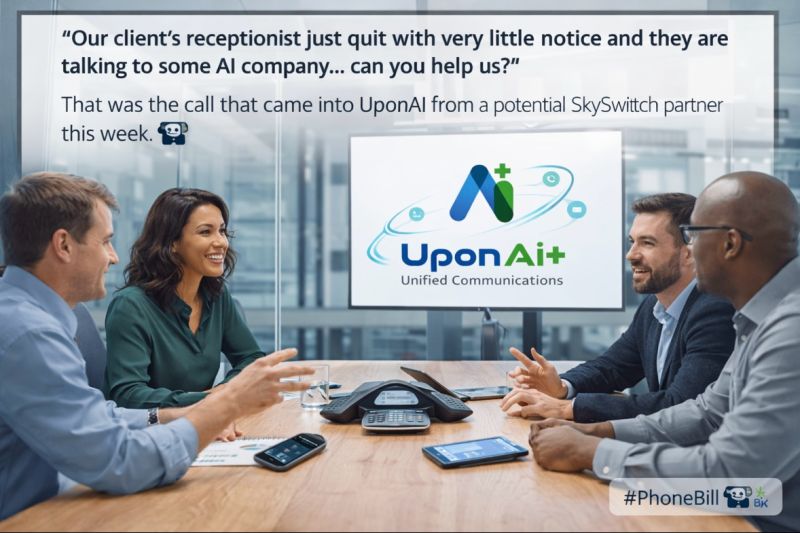
When a front-desk employee quits, most businesses do not have the luxury of waiting through a long software evaluation cycle. They need coverage immediately, especially if calls drive appointments, revenue, and customer confidence.
That is where AI voice has to prove it can do more than look impressive. The workflow has to capture intent, answer common questions, route the right calls, and keep the business reachable while the team regains stability.
UponAI focuses on that practical gap. The goal is not to replace planning with hype. It is to give businesses a responsive first-contact layer when the alternative is voicemail, missed calls, and operational drag.
What This Means
UponAI content is built around production use, not generic AI positioning. The goal is to help teams understand how routing, call handling, automation, and human handoff behave once the system is part of daily operations.
Related Solutions
Explore Related Reading
One Number, Every Location: How Pro On Call Unified a Multi-Site Real Estate Client
Pro On Call Technologies gave a multi-location real estate client one phone number, speech-based routing to the right office, and a receptionist that sounds personable rather than robotic. Here is how the deployment came together.
From Voicemail to eBay Sale: After-Hours Calls That Now Close Business
Advanced Hosted Services runs UponAI’s voice agents on its own phones and resells them to customers across 16 states. Here’s what changed.
How PressOne Eliminated Hold Times and Scaled Support Without Adding Headcount
An 800-person organization with 3 IT staff was stacking 15 to 20 callers on hold at once. Here is how PressOne used UponAI voice agents to answer every call, open tickets automatically, and cut hold time to zero.