
This article is part of the local UponAI blog library and focuses on practical AI voice and communications workflow lessons that matter in live business environments.
I spent my life in voice and networks. Trust keeps systems alive. Silence kills them.
When a platform pushes a new update without a word, I feel that same knot in my stomach I had during a network outage early in my career. No warning. No plan. No respect for the people depending on it.
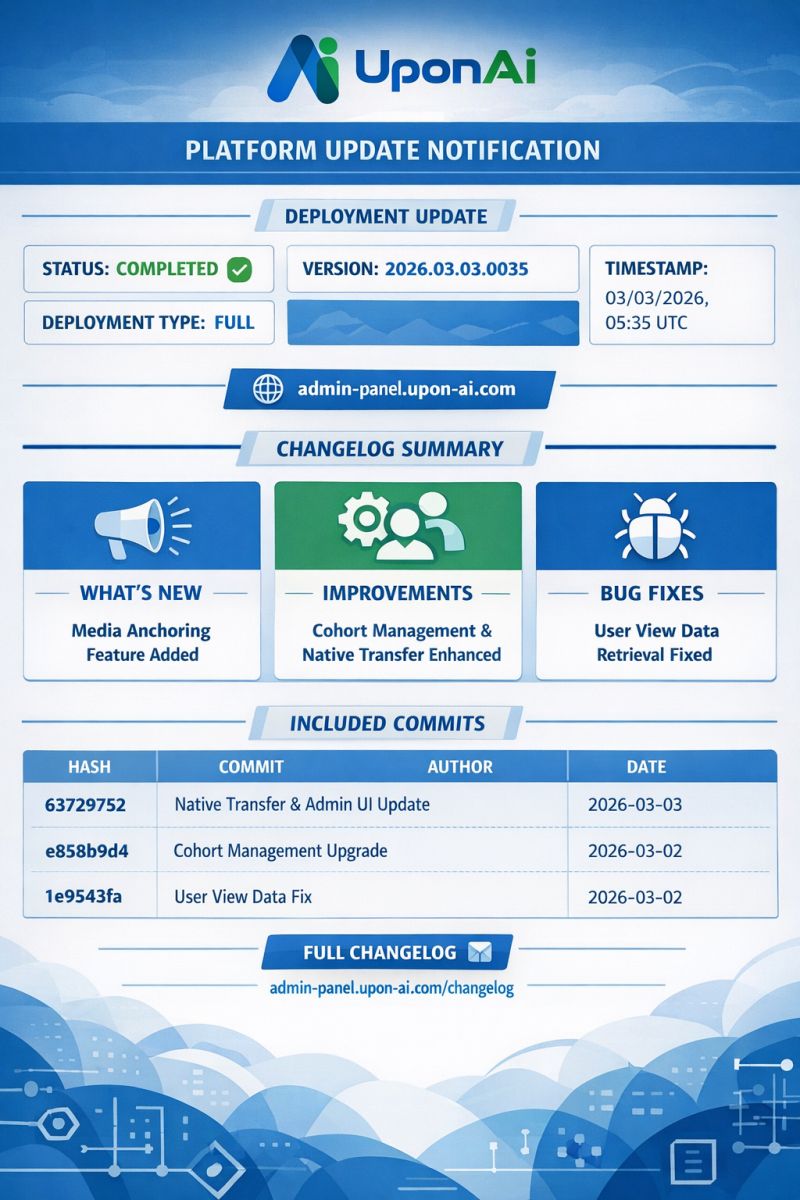
At UponAI, we built our update flow around one simple belief: users are partners, not test subjects.
When we ship something new, our users get:
→ Clear notice before we push
→ Plain language on what changes
→ Why we made the change
→ How it may touch their workflows and customers
Our AI does more than process calls. It helps us:
→ Segment updates to the right teams
→ Time messages with less impact
→ Answer follow-up questions fast
I want people to log in and feel calm, not afraid of what moved overnight.
Transparent updates do one key thing: they turn every release into a small promise kept. Over time, those promises add up. That is how trust grows, feature by feature, message by message.
Have you experienced the update surprise?
What This Means
UponAI content is built around production use, not generic AI positioning. The goal is to help teams understand how routing, call handling, automation, and human handoff behave once the system is part of daily operations.
Related Solutions
Explore Related Reading
One Number, Every Location: How Pro On Call Unified a Multi-Site Real Estate Client
Pro On Call Technologies gave a multi-location real estate client one phone number, speech-based routing to the right office, and a receptionist that sounds personable rather than robotic. Here is how the deployment came together.
From Voicemail to eBay Sale: After-Hours Calls That Now Close Business
Advanced Hosted Services runs UponAI’s voice agents on its own phones and resells them to customers across 16 states. Here’s what changed.
How PressOne Eliminated Hold Times and Scaled Support Without Adding Headcount
An 800-person organization with 3 IT staff was stacking 15 to 20 callers on hold at once. Here is how PressOne used UponAI voice agents to answer every call, open tickets automatically, and cut hold time to zero.